

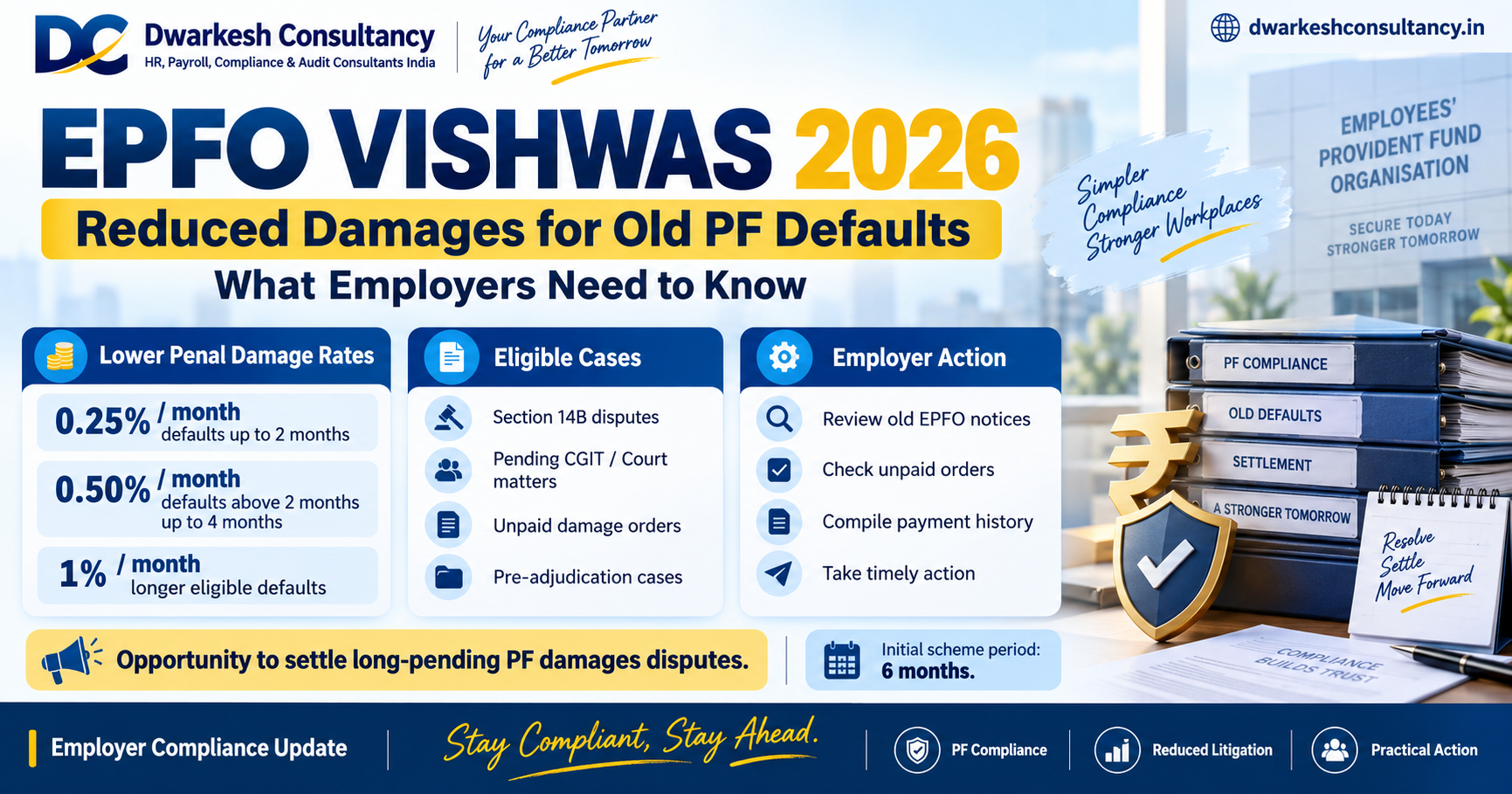
EPFO VISHWAS Scheme 2026
The Employees' Provident Fund Organisation (EPFO) has urged eligible establishments to settle long-pending provident fund damages disputes under the VISHWAS Scheme 2026.
The scheme is designed to reduce litigation, simplify settlement of old defaults and provide employers with substantially reduced rates of penal damages in eligible cases.
Why Was the VISHWAS Scheme Introduced?
A major source of EPFO litigation has been damages imposed for delayed remittance of provident fund dues under Section 14B.
According to EPFO, thousands of cases involving penal damages have remained pending before tribunals and courts, while many additional matters were at the pre-adjudication stage.
VISHWAS 2026 provides a structured mechanism for eligible employers to settle such disputes at reduced rates.
Reduced Penal Damage Rates
Under the VISHWAS framework, penal damages are rationalised to lower rates.
The approved structure includes:
- 0.25% per month for defaults up to 2 months
- 0.50% per month for defaults above 2 months and up to 4 months
- 1% per month for longer eligible defaults
These rates are substantially lower than the historical penal-damage rates applicable to many older cases.
Which Cases Can Be Covered?
The scheme is intended to cover eligible cases such as:
- Ongoing litigation under Section 14B before CGITs
- Cases pending before High Courts
- Cases pending before the Supreme Court
- Finalised Section 14B orders where damages remain unpaid
- Pre-adjudication cases where notice has been issued but the final order is pending
Eligible cases may be settled subject to compliance with the applicable scheme conditions.
What Happens to Pending Litigation?
Where an employer complies with the VISHWAS Scheme and makes payment according to the prescribed reduced damages framework, eligible pending proceedings may be brought to closure in accordance with the scheme.
EPFO's objective is to reduce prolonged litigation and improve recovery of statutory dues.
Why This Matters for Employers
For employers with old PF defaults, the scheme may provide an opportunity to:
- Reduce historical penal-damage exposure
- Close long-pending Section 14B disputes
- Reduce legal costs
- Avoid continued litigation
- Resolve older compliance matters
- Improve the organisation's PF compliance position
What Employers Should Do
Employers should review:
- Old EPFO notices
- Section 14B orders
- Pending CGIT appeals
- High Court or Supreme Court matters relating to PF damages